Developed custom for Wisdom Manjeri Units.
A lightweight, high-performance community engine designed to showcase listings and streamline event enrollments.
Wisdom Manjeri hosts multiple weekly lectures, youth activities, and weekend seminars. Coordinating these events via static chat groups or spreadsheets resulted in manual overhead and missing attendance statistics. The client needed a public website to index events, filter them by type (Class, Youth Event, Lecture), and allow attendees to sign up without creating an account.
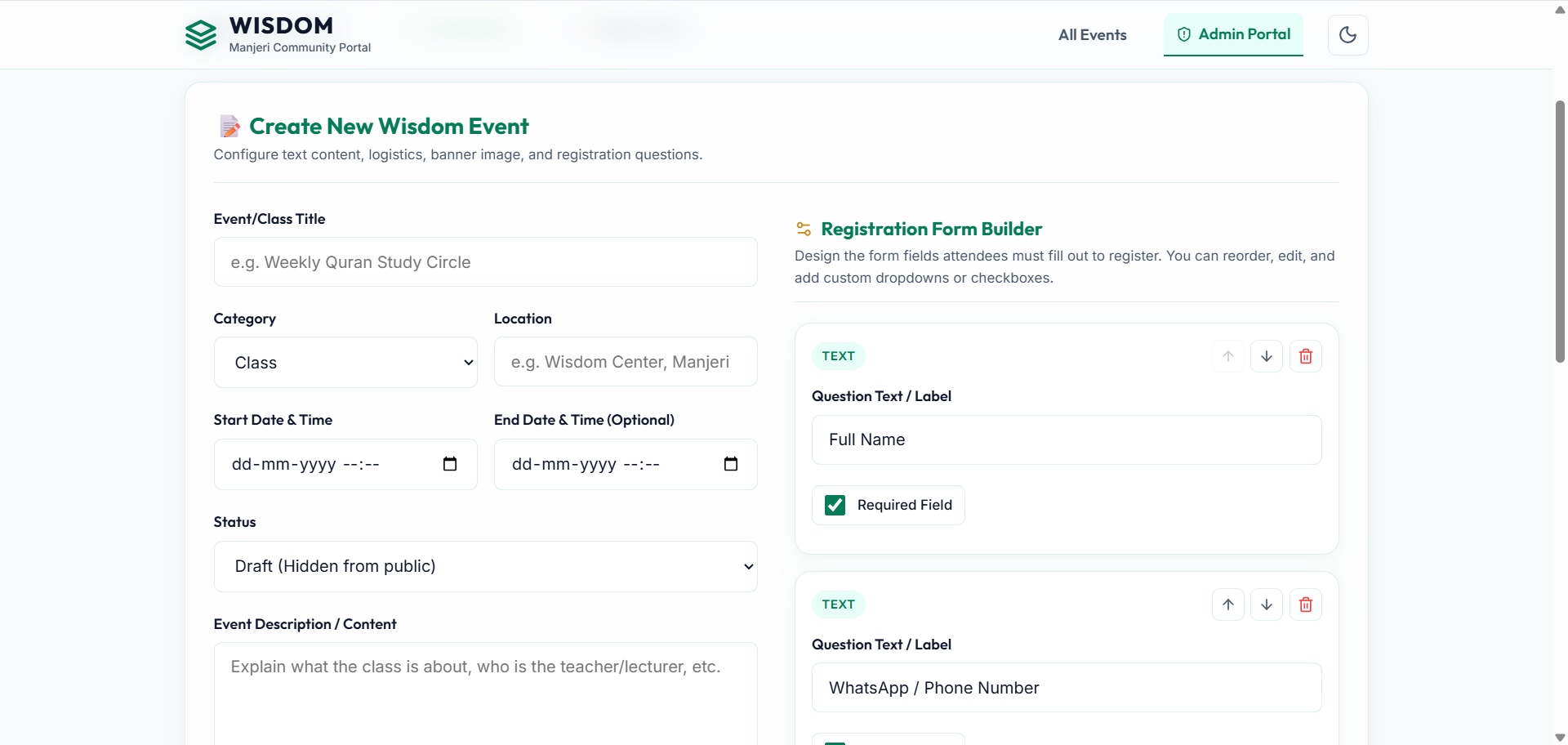
Additionally, admins required a secure dashboard to construct customized registration sheets (e.g. asking for WhatsApp numbers, gender details, or custom dropdown options) dynamically based on the event's specific requirements.
Visual workflow layouts built to optimize community engagement and administrative controls.
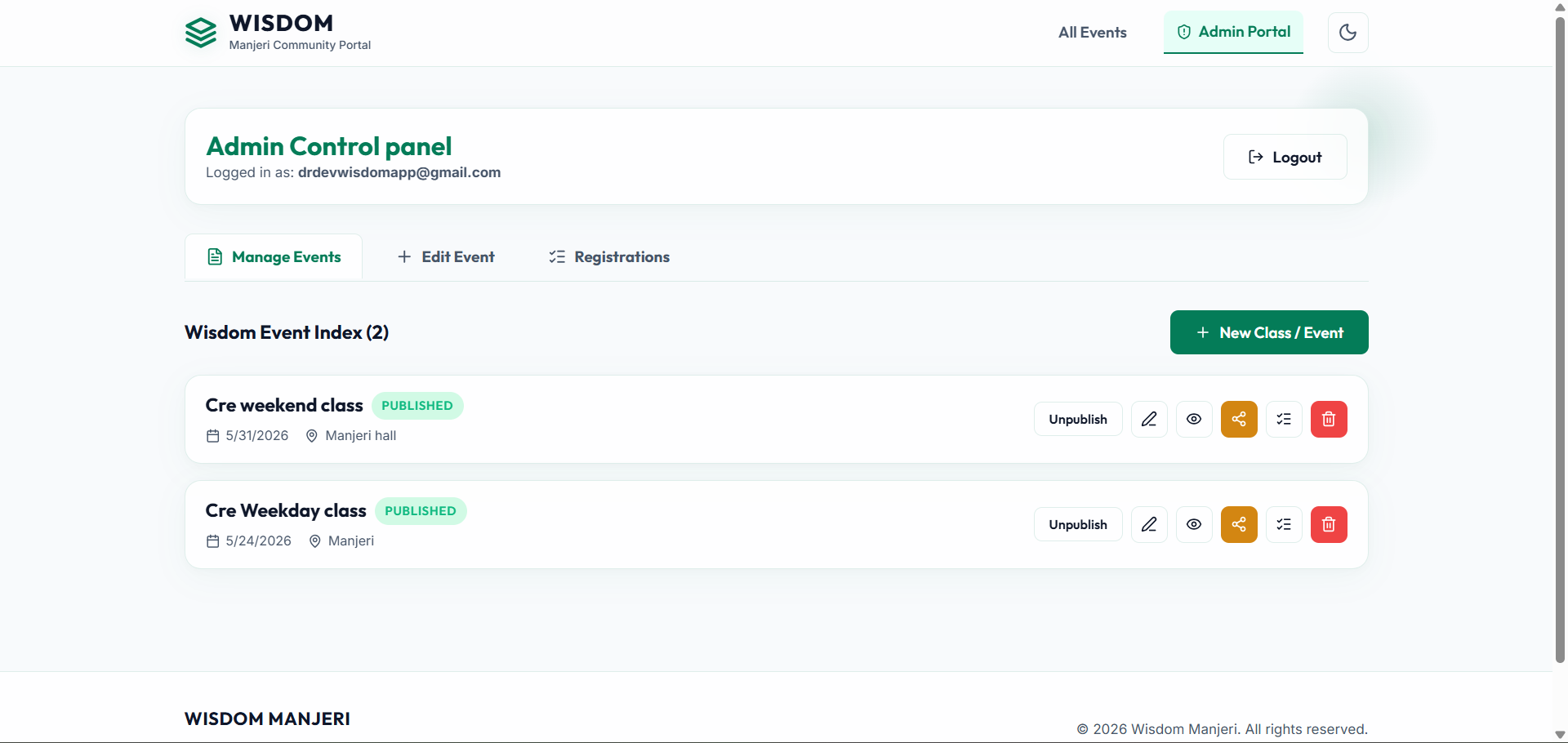
The admin workspace lists all created events, displaying active publish stamps, scheduled locations, and registration numbers. Administrators can publish or unpublish events in one click, export attendance logs, and create new seminars.
Each class requires different logistics details. The custom form builder allows admins to design dynamic input fields. By adding checkboxes, custom inputs, or marking fields (like WhatsApp numbers or Gender) as required, form fields render dynamically on checkout.
Attendee interactions designed to maximize class sign-ups and event discovery.
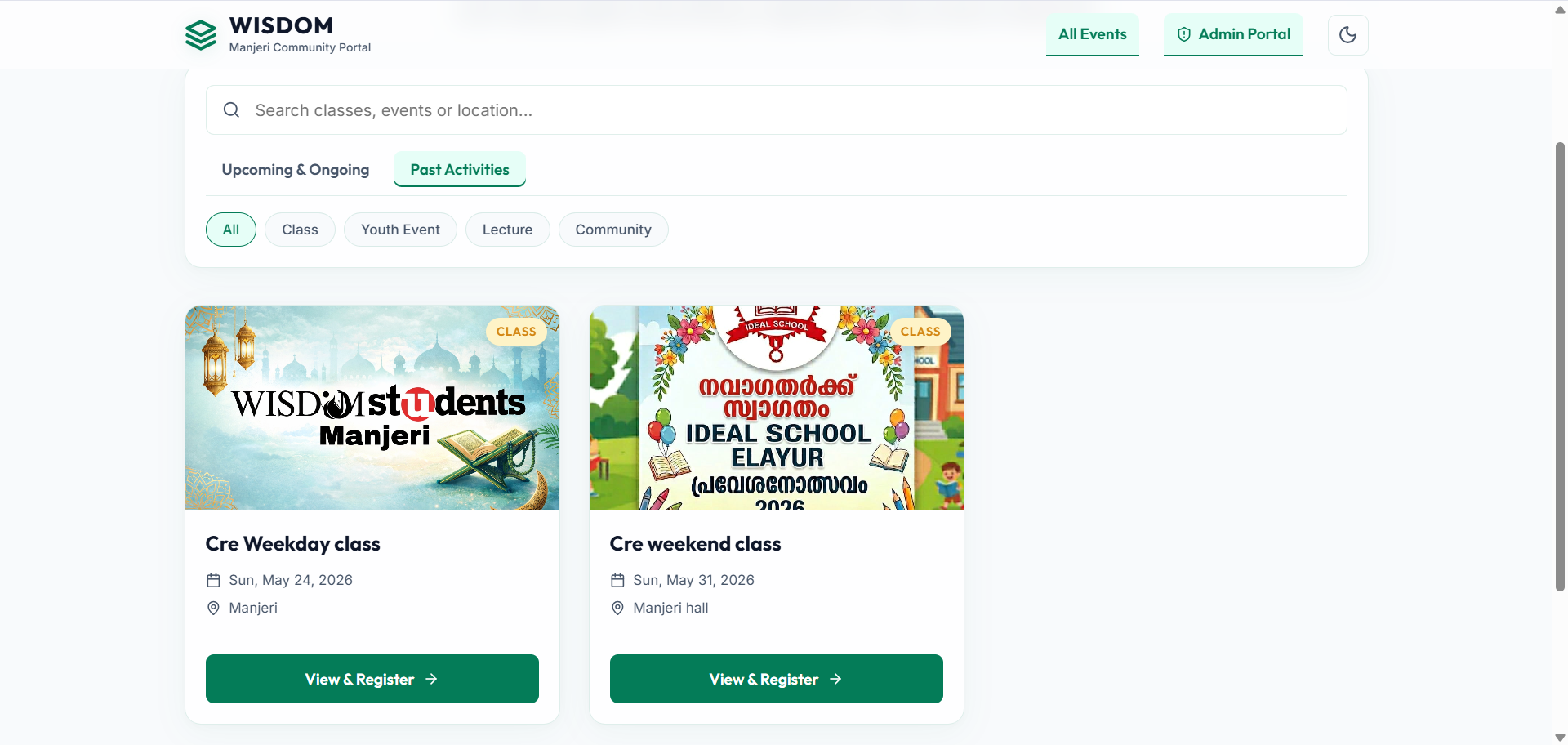
Active events display scheduled dates, times, and location maps. Users can search and filter listings dynamically.
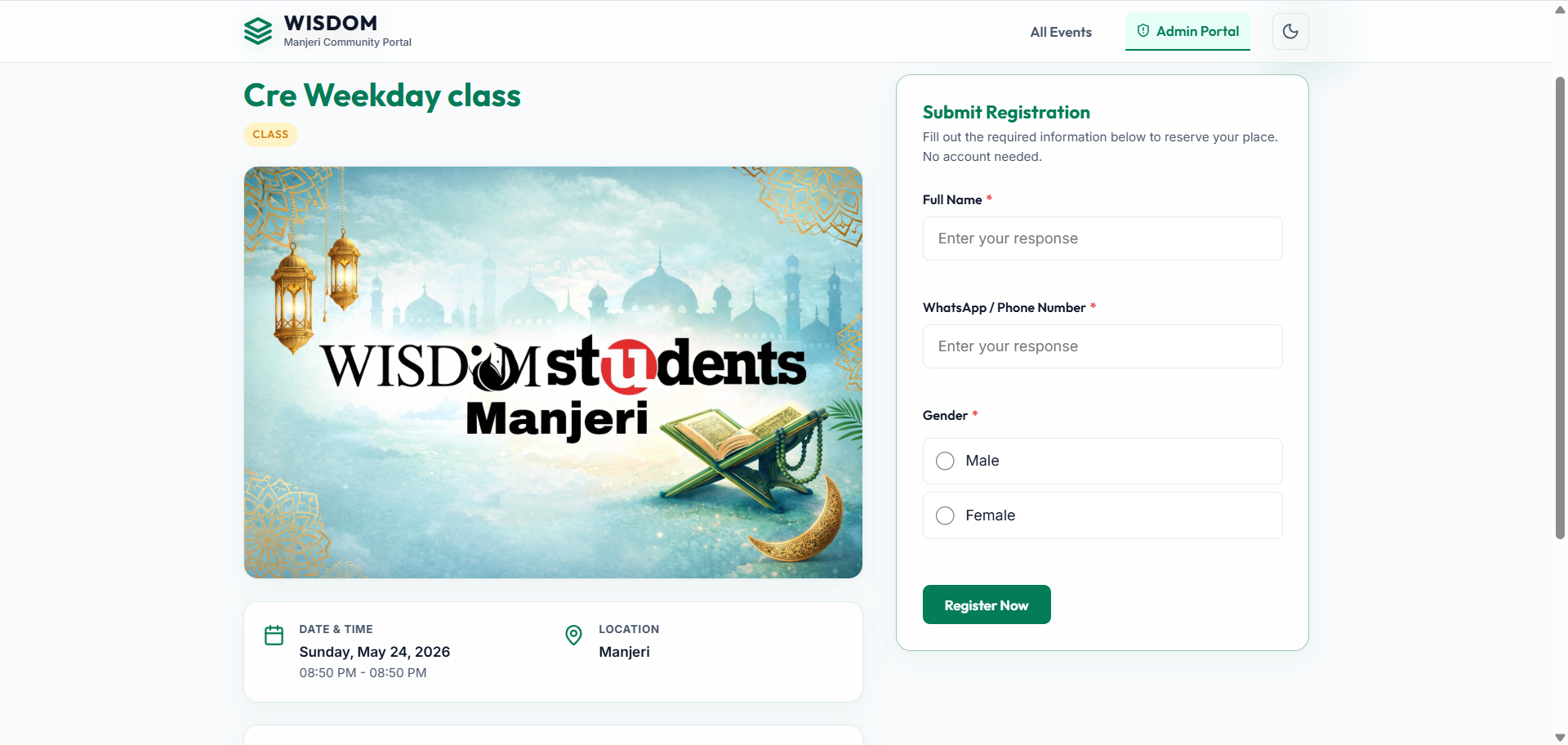
Fast, modal-free registration requiring no client login credentials. Prompts custom questions based on the event structure.
Engineered using responsive single-page patterns to handle peak traffic spikes during announcements.
Uses a Vite-bundled React structure to enable instantaneous route transitions, fast local caching, and high-fps list filtering on mobile browsers.
A mobile-first layout engine built with utility classes. Promotes lightweight CSS files, responsive card ratios, and crisp text layouts on mobile phones.
Uses flexible document databases to store event metadata. Dynamic JSON schemas allow customized registration fields to map seamlessly per event node.